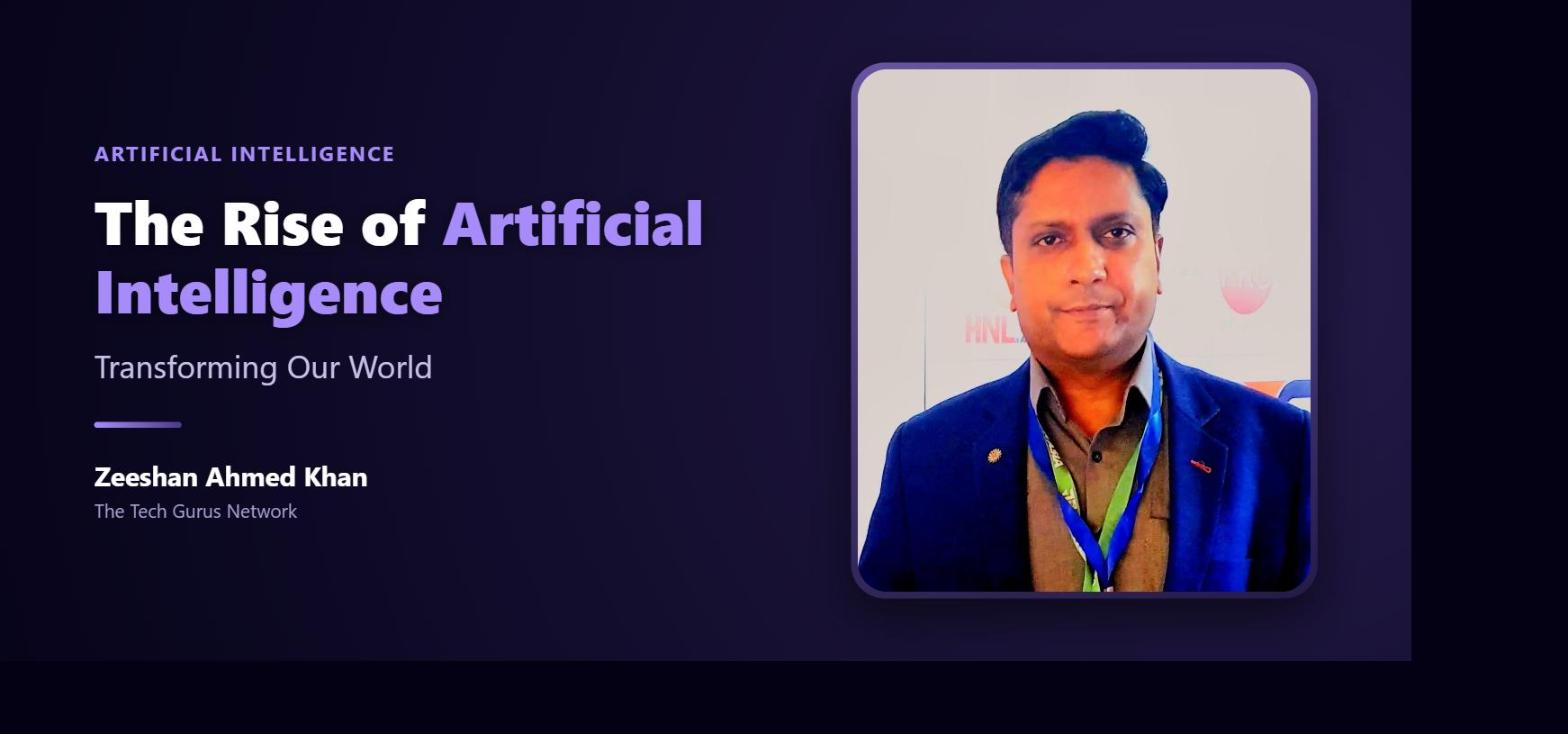
By Zeeshan Ahmed Khan
Artificial intelligence has moved from the realm of science fiction into the fabric of everyday life. From the moment we wake up and check a phone that has already sorted our notifications by relevance, to the recommendations that guide what we watch or buy, AI quietly shapes countless small decisions throughout the day. What began decades ago as an academic pursuit to mimic human reasoning has evolved into a powerful set of tools reshaping industries, economies, and the way people work.
One of the most significant shifts has been the rise of machine learning, where systems improve their performance by learning patterns from data rather than following rigid, hand-coded rules. This approach has powered breakthroughs in image recognition, language translation, and predictive analytics. More recently, large language models have demonstrated an ability to generate coherent text, answer questions, and assist with creative and technical tasks, sparking both excitement and debate about the future of knowledge work.
Businesses across sectors are adopting AI to streamline operations. Healthcare providers use it to help detect patterns in medical imaging, financial institutions apply it to flag unusual transactions, and manufacturers rely on predictive maintenance models to reduce downtime. These applications promise efficiency gains, but they also raise important questions about accountability, bias, and the need for human oversight when algorithms influence high-stakes decisions.
The conversation around AI is not only technical but deeply human. As automation takes on more routine tasks, workers and organizations must adapt, developing new skills and finding ways to collaborate with intelligent systems rather than be displaced by them. Policymakers, too, face the challenge of crafting regulations that encourage innovation while protecting privacy, fairness, and safety.
Looking ahead, the trajectory of AI will likely be defined not just by how capable these systems become, but by how thoughtfully society chooses to integrate them. Transparency, ethical design, and a commitment to keeping humans in the loop will determine whether AI becomes a tool that broadens opportunity or one that deepens existing inequalities. What is certain is that artificial intelligence is no longer a distant possibility; it is an active participant in shaping the world we live in, and understanding it has become essential for everyone, not just technologists.
